On the second Saturday in May, Nora and Felix Abernathy carried a mattress into a house that did not exist a year ago, on the same foundation as the one that burned. Their two children chose bedrooms on opposite ends of the hall this time. The dog, who had been the first thing into the car on the night of the fire, went straight to the spot by the back door where her bed used to be.
It had been eighteen months. This is how the claim went, in their words and ours, because a wildfire claim is long and most people go into one without knowing what it will ask of them.
The night they left
The Harper Canyon fire started on a Tuesday afternoon in November 2024, in brush east of Ramona, with Santa Ana winds behind it. By ten that night the Abernathys could see the glow from their kitchen. The evacuation order came at 1:40 in the morning.
"We had a list on the fridge," Nora said. "Dog, documents box, laptops, medicines, chargers. We'd made it two summers before and laughed at ourselves for it. It took us eleven minutes."
They drove to a hotel in Poway. By morning, a neighbor who had stayed to hose down his roof sent them a photo. The house was gone. The garage, the barn and the oak in the front yard were gone with it.
The first call
Nora called our claims line at 6:05 from the hotel parking lot. She did not have the policy number, and did not need it. By nine, Monica Tsai, a property adjuster from our catastrophe team, had called back.
The first thing Monica did was not about the house. It was about where the family would sleep for the next year. Every Harborline home policy carries loss of use cover, which pays the extra cost of living somewhere else while your home is rebuilt. Monica sent an advance of $10,000 the same afternoon, before anyone had seen the site, so the family could pay for the hotel, clothes and school shoes without waiting.
She asked whether the kids had what they needed for school on Monday. I hadn't even thought about Monday.
Nora AbernathyWhat the policy covered
The Abernathys had added our wildfire endorsement in 2019, when their agent at Grand Avenue Insurance in Escondido went through their renewal with them and pointed out that their house sat in a hazard zone. Without it, wildfire would have been outside their standard form. With it, the fire was covered like any other.
Three parts of the policy carried most of the weight:
- Dwelling, with extended replacement cost. Their dwelling limit was $640,000. Building costs in the county jumped after the fire, as they always do, and the final cost to rebuild came to $781,000. The extended replacement cost option, which pays up to 25 percent above the limit, covered the difference.
- Personal property. Everything inside the house, paid at replacement cost once the family showed what they had lost.
- Loss of use. Seventeen months in a rented house in Ramona, plus the hotel weeks before that.
The hardest part: the list
Ask anyone who has been through a total loss what was hardest, and most will say the inventory. To be paid for the things in the house, you have to say what they were.
The Abernathys had no written inventory. What they had were phones. Monica sat with them over two evenings and went room by room through eight years of photos: birthday parties in the living room, a video of the kitchen remodel, a picture of the garage taken to sell a bicycle. Every photo showed something else in the background. The final list ran to 1,140 items.
"You find yourself grieving things you'd forgotten you owned," Felix said. "A box of my dad's tools. The kids' height marks on the pantry door. Some of it you can replace and some of it you can't, and Monica never pretended otherwise."
The claim in numbers
- First payment: the day after the fire.
- Rebuild: $781,000, including $141,000 of extended replacement cost.
- Belongings: $203,000, paid in four stages as the list grew.
- Living elsewhere: $68,900 over seventeen months.
- Debris removal: paid separately, on top of the dwelling limit.
- One adjuster from first call to final payment.
Building it back
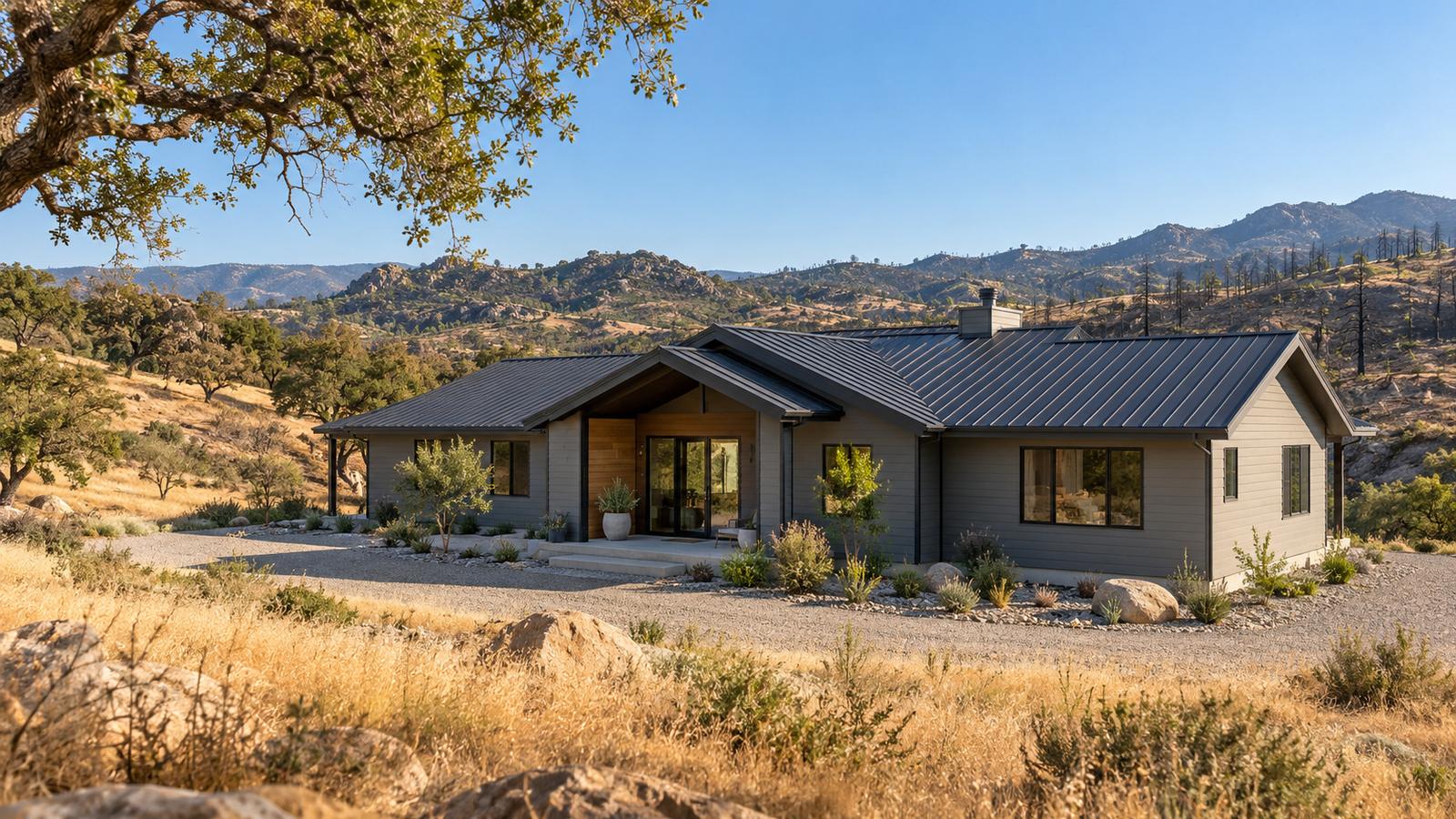
Permits took five months, which is about normal after a large fire, when every family on the road is applying at once. The new house is a few feet smaller than the old one and built to today's code: a metal roof rated Class A, ember-resistant vents, enclosed eaves, fiber cement siding and a five-foot band of gravel around the walls. The code upgrade portion of the policy paid for the parts the old house had not needed.
Those same features now earn the house our wildfire mitigation credit. Their wildfire line at renewal came in lower than it was before the fire.
What they would tell a neighbor
We asked the Abernathys what they would tell someone in a hazard zone who has not been through it. They had three things, and they did not hesitate:
- Walk through your house once a year with your phone recording, opening every closet and drawer. Keep the video somewhere that is not the house.
- Find out what your dwelling limit is and what it would cost to rebuild today. They are different numbers.
- Make the list for the fridge. Eleven minutes is not long.
And one more, from Felix: "Read your policy before you need it. We read ours in a hotel room at 3am. It was fine, but that's no time to find out."