On the evening of Friday, August 14, a monsoon storm crossed the East Valley with hail the size of quarters and a downburst that pushed gusts past 70 miles an hour. In three days, 1,340 Harborline members in Mesa, Gilbert and Chandler reported damage. By Monday morning, 54 adjusters were working the area, 20 of them sent from California. Carl Bergstrom was one of the Arizona ones.
Carl has been a Harborline adjuster for 22 years, the last eleven on the catastrophe team out of our Tucson office. He has worked wildfires in San Diego County, a flood in Yuma, and, by his count, fourteen monsoon seasons. We spent his Monday with him.
- 5:40Briefing. A hotel conference room in Mesa that has become a field office. Coffee, a map of claims by street, and a list for each adjuster. Carl's has nine homes on it. The team lead reminds everyone about heat: water, shade, nobody on a roof alone after noon.
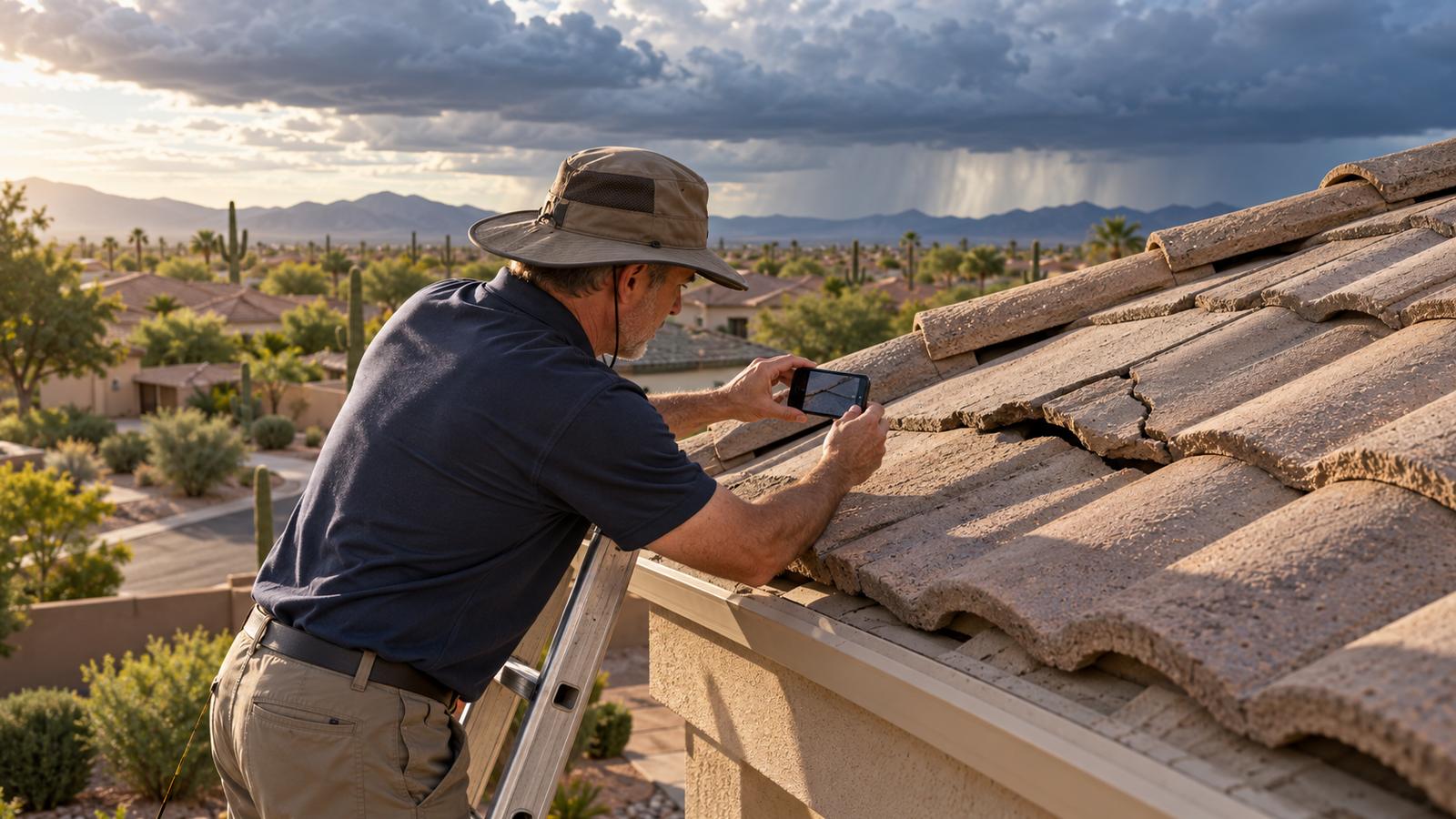
- 7:00Gilbert, a tile roof. Concrete tile roofs survive most hail, but quarter-sized stones crack a few. Carl walks the roof before the sun heats it, marks 31 broken tiles in chalk, and photographs each. The underlayment beneath is fine. He writes the estimate on the tailgate, $6,240, and explains it to the member before he leaves the driveway.
- 8:45Mesa, a tree through a carport. A eucalyptus came down across the carport and the hood of the member's car. Carl handles the carport and the tree removal under the home policy, and calls an auto adjuster so the car is on the same day's list rather than a separate wait.
- 10:20Mesa, water through a ceiling. An 81-year-old member living alone. Wind lifted a section of her flat roof and Friday's rain came through her bedroom ceiling. Carl calls a contractor from our emergency list to tarp the roof that afternoon, books her a hotel near her daughter's house, and leaves an advance payment for the first week. The estimate can wait. She cannot sleep there tonight.
- 12:30Lunch. In the truck, with the engine running for the air conditioning. It is 108 degrees. He returns five calls.
- 1:15Gilbert, a fence and a pool screen. Covered, and quick: 140 feet of block wall cap and a torn screen enclosure.
- 2:40Chandler, a shingle roof. The hardest conversation of the day. The member reported hail damage. The hail did dent some vents, which are covered. But most of the shingles are bare and curling from age, and that is wear rather than storm damage. Carl gets on the roof with the member's son, shows him the difference between a fresh hail strike and twenty years of sun, and writes the vents. He also tells him exactly what to ask a roofer about replacing the rest.
- 4:30Three more homes. Two cracked skylights and a blown-off ridge cap. Small claims, all covered.
- 6:30Back at the hotel. Nine estimates uploaded. Then he calls every member he saw, including the ones he already talked to in the driveway, to confirm the numbers and tell them when the money will arrive.
The roof is the easy part. The job is the person standing in the driveway who has never done this before and is waiting to hear if they're going to be all right.
Carl Bergstrom, catastrophe adjusterThe partial claim
We asked Carl about the Chandler roof, because those are the claims members remember and sometimes the ones they write to us about.
"Insurance pays for sudden damage. It doesn't pay for a roof getting old," he said. "That's not a trick, it's the deal for everybody. If I paid for worn-out roofs, every member's premium would go up to cover it. What I can do is be straight about it on the roof, not in a letter three weeks later, and make sure everything the storm actually did is in the estimate."
The son, Carl said, thanked him. The member called the next day with one more question, about a stain on the garage ceiling. Carl went back on Thursday. It was storm damage, and it was added to the claim.
The August 14 storm
- 1,340 claims reported in the first 72 hours, 1,520 in all.
- 54 adjusters in the field by Monday, including 20 from California.
- Average of 4.1 days from report to first payment.
- About 9 percent of claims paid in part, almost all for roof wear or earlier damage.
What Carl wants members to know
- Take photos of your roof and yard every spring, from the ground is fine. When a storm hits, "before" pictures settle questions fast.
- Stop more damage if you safely can, with a tarp or a bucket, and keep the receipts. That is covered.
- Be wary of anyone knocking on doors after a storm offering a free roof. Call us first.
- Report it even if you are not sure. An adjuster would rather look at a roof that is fine than miss one that is not.
On Tuesday, Carl's list had eleven homes on it. He was back in Tucson the following Saturday, in time for his granddaughter's birthday, and back in Mesa on Monday.